The Aesthetic Archetypes™
How we look shapes how we think.
How we think shapes how we work — and how we live.
In a world that moves fast, most teams and individuals make decisions before they’ve really seen what’s in front of them. We react quickly, rely on assumptions, and miss the quieter signals that shape meaning, judgment, and connection.
The Aesthetic Archetypes™ offer a different starting point.
They help people slow down, look again, and understand how they make meaning — individually and together. Not by analysing content or teaching theory, but by changing how attention is used in the moment.
This work begins with something simple: looking together.
What It Is
The Aesthetic Archetypes™ are five ways of seeing and thinking that shape how people interpret experience.
They are not personality types or fixed traits. They are learnable, flexible modes of perception that everyone moves between — often without noticing.
By making these ways of seeing visible, the framework gives people:
language for how they think
insight into how others see differently
the ability to expand their perceptual range
At its core, this is a practice in attention — and attention is where meaning begins. As people practice the skills of the different archetypes, they grow their capacity for creativity, connection, and collaboration.
Who It’s For
The Aesthetic Archetypes™ are for teams who want to unlock new ways of thinking and working together — clearer communication, deeper creativity, and more innovative ideas.
This work is especially valuable for:
Cross-functional teams seeking alignment across roles, priorities, and perspectives
Creative teams looking to refresh their thinking, spark new ideas, and expand how they approach problem-solving
Teams focused on innovation and ideation, who want to generate stronger ideas by widening the range of perspectives in the room
Burnt-out groups who need a collective pause to reset, reconnect, and restore openness
Teams navigating complexity or change, who benefit from slowing down and thinking more expansively before acting
Groups committed to diversity and inclusion, who want practical ways to ensure multiple perspectives are heard and valued
At its heart, this work helps teams communicate more openly, think more flexibly, and collaborate more effectively — creating a shared culture of open-mindedness, multiperspectivity, and collective intelligence.
How It Works
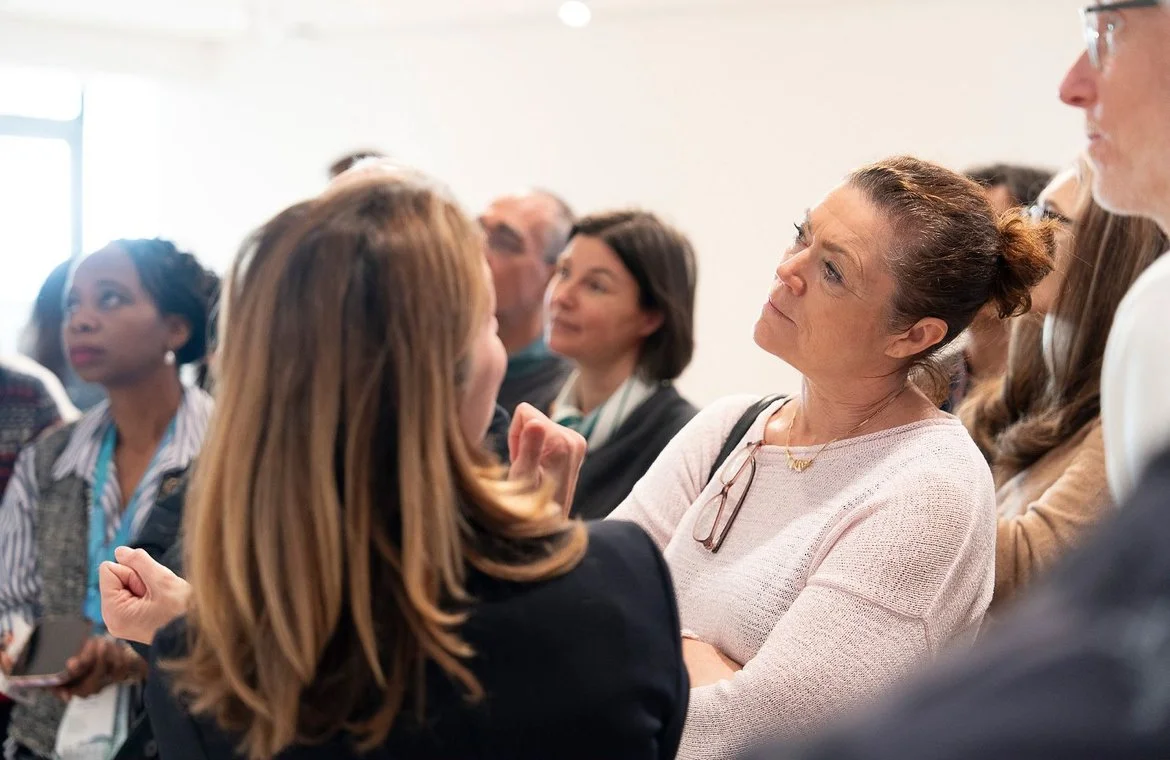
We begin by selecting a single image, most often a work of art, and inviting a group to take part in a guided conversation about what they see.
Our Artful Method coaches are trained to create a safe, open space where all ideas are welcome, all voices are heard, and no one is positioned as having the “right” answer. Every contribution is met with neutral paraphrasing, which keeps the group aligned and allows meaning to build collectively rather than competitively.
This process creates a strong sense of shared attention and trust. The group becomes, quite naturally, a team of meaning-makers — learning how they see together before jumping to conclusions or decisions.
The conversation is recorded and transcribed. In the first stage of analysis, we look for patterns in how meaning is made: how people describe what they see, how quickly they interpret, how they handle ambiguity, and how ideas connect across the group.
In the second stage, a trained Artful Method practitioner reviews the transcript in full and identifies the dominant Aesthetic Archetypes at play — and how they interact. This human review preserves nuance, tone, and context, ensuring insight without reduction.
What emerges is a clear picture of how a group thinks together — where perspective flows, narrows, and new insight becomes possible.
Read more about our methodology here
What It Is
The Aesthetic Archetypes™ are five ways of seeing and thinking that shape how people interpret experience.
They are not personality types or fixed traits. They are learnable, flexible modes of perception that everyone moves between — often without noticing.
By making these ways of seeing visible, the framework gives people:
language for how they think
insight into how others see differently
the ability to expand their perceptual range
At its core, this is a practice in attention — and attention is where meaning begins. As people practice the skills of the different archetypes, they grow their capacity for creativity, connection, and collaboration.
Why this matters now:
In a world increasingly shaped by AI, speed and information are no longer the challenge — interpretation is. AI can process data, but it cannot perceive nuance, hold human context, or imagine new possibilities. When teams move too quickly from observation to opinion, they mistake speed for insight and risk narrowing their thinking.
The Aesthetic Archetypes slow that moment down. By learning to see before they decide, people develop greater clarity, deeper listening, stronger alignment, and more thoughtful judgment. These skills extend far beyond the image — into meetings, decisions, relationships, and everyday work.
This isn’t about better answers.
It’s about better thinking — thinking that can hold complexity, difference, and possibility at the same time. When people learn to look together with deeper awareness, they begin to think together differently.
What’s Next
The Aesthetic Archetypes™ are designed to move from insight to practice.
Teams begin with shared workshops and discovery, then deepen the work through facilitated sessions, individual archetype insights, and ongoing practice. Over time, the method becomes a shared language — a way of noticing, interpreting, and responding that travels into daily life.
What starts as a conversation about an image becomes something larger:
a shift in how people pay attention, make meaning, and move forward together.
Because the practice trains how attention is used — not what to think about — the skills transfer naturally from art to work, from conversation to decision-making, and from collective dialogue to individual judgment.