How the Aesthetic Archetype Portrait Is Created
A Research-Based Process
The Aesthetic Archetype Portrait is not a personality test.
It is not based on self-report.
It is not a quiz.
It is derived from observable cognitive patterns that emerge while you are making meaning in real time.
The methodology builds on decades of empirical research in aesthetic cognition and constructivist learning theory. That research demonstrated that when people are asked a single open-ended question — such as:
“What is going on here?”
—their spontaneous language reveals stable and measurable patterns in how they construct meaning.
Those patterns can be systematically analyzed.
Step 1: Capture Thinking in Motion
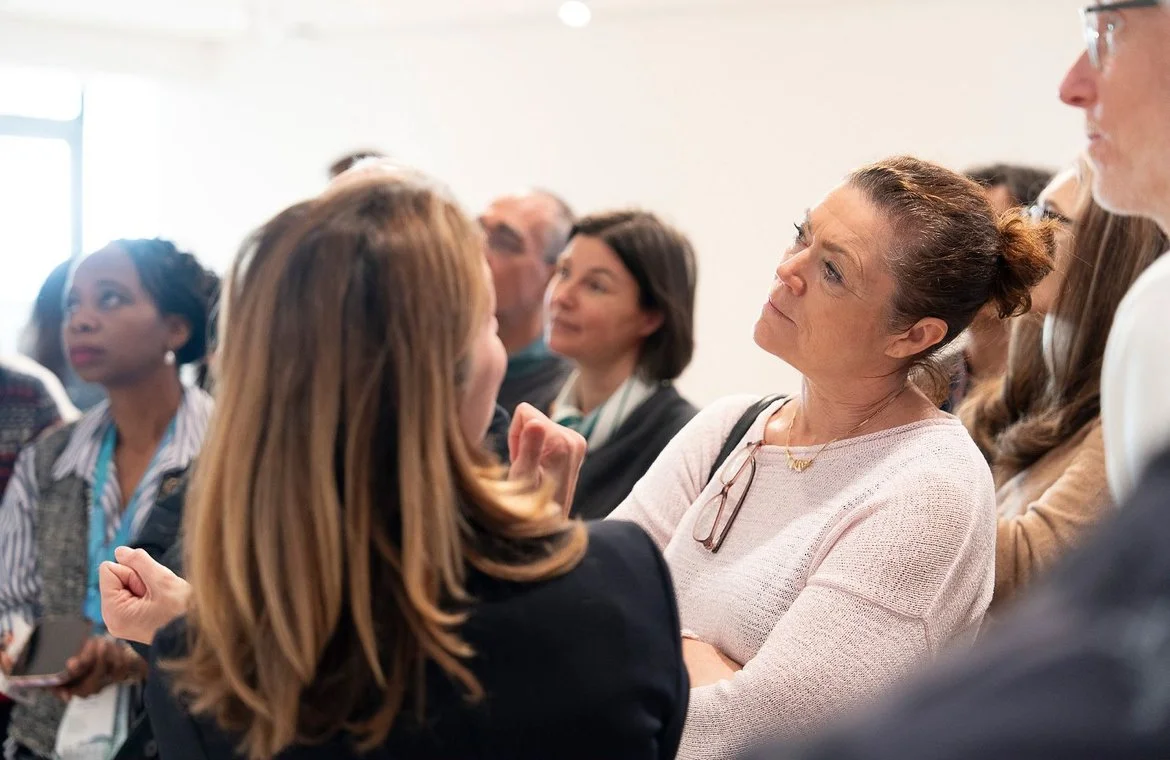
During the workshop, participants engage in a facilitated dialogue around a single image.
The focus is not on art knowledge.
It is on perception.
As you speak, we listen for:
What you notice first
How quickly you interpret
Whether you return to the image for evidence
How you handle ambiguity
How you connect ideas
How you respond to others’ interpretations
The session is recorded and transcribed so the thinking process — not just conclusions — can be examined.
Step 2: Micro-Analysis of Thought Units
Each transcript is broken into small “thought units.”
A thought unit is a distinct cognitive move.
For example:
Observation (“There’s a shadow on the left.”)
Association (“It reminds me of a hospital.”)
Emotional response (“It feels tense.”)
Hypothesis (“Maybe she’s hiding something.”)
Evidence-based reasoning (“Because her posture is closed.”)
Comparison
Evaluation
Reflection on intention
These are identifiable mental actions.
We analyze:
Frequency of each type
Order in which they appear
Whether interpretations are supported
How often the speaker revises or expands
How ambiguity is sustained or resolved
This analysis reveals patterns of attention and reasoning that are consistent and measurable.
Step 3: Pattern Clustering
Rather than assigning a level or stage, we look at clusters of dominant perceptual tendencies.
Some participants naturally:
Move quickly into narrative construction
Anchor strongly in concrete evidence
Seek coherence and structure
Focus on emotional or symbolic meaning
Reflect on process and multiple interpretations
Most people access several modes — but one or two tend to organize attention more strongly.
The Aesthetic Archetypes™ are names given to these recurring perceptual orientations.
They describe how attention organizes itself when constructing meaning.
Step 4: The Portrait
Your Archetypal Portrait reflects:
The perceptual modes you accessed most naturally
How those modes interacted
Where flexibility appeared
Where meaning closed quickly or stayed open
Because these patterns are drawn from your actual language — not a questionnaire — the portrait is behavioral, not aspirational.
It reflects what you did, not what you believe about yourself.
Why This Matters
Cognitive science shows that perception shapes reasoning.
How you look determines:
What you notice
What you ignore
How quickly you decide
How long you stay curious
By making perceptual patterns visible, individuals and teams gain:
Metacognitive awareness
Greater cognitive flexibility
Improved collaboration across different thinking styles
Stronger tolerance for complexity
In short:
The Aesthetic Archetype Portrait makes visible the architecture of your attention.
And attention is where meaning — and decision-making — begins.
If you’d like, I can now:
• Make this even tighter (1-page executive version)
• Make a more academic version with citations language
• Or make a more poetic Artful Method–branded version
Which direction do you want to lean — corporate rigorous or art-intellectual rigorous?
not if your attention but of your percepyion frame wprk- how you think when you look
Yes — that distinction is important.
We’re not mapping attention in general.
We are mapping your perceptual framework — how you think when you look.
Here is the revised, precise version:
How the Aesthetic Archetype Portrait Is Created
The Science Behind the Process
The Aesthetic Archetype Portrait is not a personality test.
It is not self-reported.
It does not measure preferences.
It analyzes your perceptual framework — the structure of thinking you use when making meaning from what you see.
The method builds on decades of empirical research in aesthetic cognition demonstrating that when individuals are asked a single open-ended question —
“What is going on here?”
—their spontaneous language reveals consistent cognitive patterns in how they interpret visual experience.
Those patterns can be observed, coded, and analyzed.
Step 1: Capture Thinking While Looking
In the workshop, participants engage in a guided dialogue around a single image.
There is no art history instruction.
No right answer.
We focus on how meaning is constructed in real time.
The conversation is recorded and transcribed so the structure of reasoning — not just conclusions — can be examined.
Step 2: Break the Transcript into Cognitive Moves
Each transcript is divided into small “thought units.”
A thought unit represents a distinct perceptual action, such as:
Concrete observation
Narrative construction
Association
Emotional interpretation
Hypothesis
Evidence-based reasoning
Comparison
Reflection on intention
Revision or reconsideration
These are identifiable mental operations.
We analyze:
Which types of moves appear most often
How quickly interpretation occurs
Whether claims are grounded in visual evidence
How ambiguity is handled
Whether multiple interpretations are sustained or resolved
This reveals the underlying framework organizing your perception.
Step 3: Identify the Perceptual Framework
Rather than assigning levels or ranking development, we identify dominant perceptual orientations.
Some people primarily:
Construct narrative meaning
Anchor in observable detail
Seek coherence and structure
Interpret symbolically or emotionally
Reflect on process and multiple possibilities
Most individuals access several modes — but one or two tend to organize perception most strongly.
The Aesthetic Archetypes™ name these recurring perceptual frameworks.
They describe how you think when you look.
Step 4: The Portrait
Your Archetypal Portrait reflects:
The perceptual frameworks you used most naturally
How they interacted
Where flexibility appeared
How you navigated ambiguity and interpretation
Because this analysis is drawn from your actual spoken reasoning — not a survey — it reflects your lived cognitive pattern in action.
Why It Matters
Your perceptual framework shapes:
How you interpret situations
How quickly you form conclusions
How you respond to complexity
How you collaborate with others
When you understand how you think when you look, you gain the ability to expand that framework.
Not by changing who you are —but by increasing perceptual range.
And perceptual range supports cognitive range.